Warning: include_once(/home/levohealth/staging/staging.levohealth.com/public_html//.fw-config.php): failed to open stream: No such file or directory in /home/levohealth/staging/staging.levohealth.com/public_html/wp-settings.php on line 301

Warning: include_once(): Failed opening '/home/levohealth/staging/staging.levohealth.com/public_html//.fw-config.php' for inclusion (include_path='.:/opt/cpanel/ea-php74/root/usr/share/pear') in /home/levohealth/staging/staging.levohealth.com/public_html/wp-settings.php on line 301

Deprecated: Methods with the same name as their class will not be constructors in a future version of PHP; rvam_organization_schema_widget has a deprecated constructor in /home/levohealth/staging/staging.levohealth.com/public_html/wp-content/plugins/organization-schema-widget/organization-schema-widget.php on line 81

Deprecated: Function create_function() is deprecated in /home/levohealth/staging/staging.levohealth.com/public_html/wp-content/plugins/organization-schema-widget/organization-schema-widget.php on line 849

Warning: "continue" targeting switch is equivalent to "break". Did you mean to use "continue 2"? in /home/levohealth/staging/staging.levohealth.com/public_html/wp-content/plugins/revslider/includes/operations.class.php on line 2758

Warning: "continue" targeting switch is equivalent to "break". Did you mean to use "continue 2"? in /home/levohealth/staging/staging.levohealth.com/public_html/wp-content/plugins/revslider/includes/operations.class.php on line 2762

Warning: "continue" targeting switch is equivalent to "break". Did you mean to use "continue 2"? in /home/levohealth/staging/staging.levohealth.com/public_html/wp-content/plugins/revslider/includes/output.class.php on line 3706

Deprecated: Array and string offset access syntax with curly braces is deprecated in /home/levohealth/staging/staging.levohealth.com/public_html/wp-content/themes/parallelus-vellum/framework/includes/load-functions.php on line 1086

Deprecated: Array and string offset access syntax with curly braces is deprecated in /home/levohealth/staging/staging.levohealth.com/public_html/wp-content/themes/parallelus-vellum/framework/includes/load-functions.php on line 1087

Deprecated: Array and string offset access syntax with curly braces is deprecated in /home/levohealth/staging/staging.levohealth.com/public_html/wp-content/themes/parallelus-vellum/framework/includes/load-functions.php on line 1088

Deprecated: Array and string offset access syntax with curly braces is deprecated in /home/levohealth/staging/staging.levohealth.com/public_html/wp-content/themes/parallelus-vellum/framework/includes/load-functions.php on line 1089

Deprecated: Array and string offset access syntax with curly braces is deprecated in /home/levohealth/staging/staging.levohealth.com/public_html/wp-content/themes/parallelus-vellum/framework/includes/load-functions.php on line 1127

Deprecated: Array and string offset access syntax with curly braces is deprecated in /home/levohealth/staging/staging.levohealth.com/public_html/wp-content/themes/parallelus-vellum/framework/includes/load-functions.php on line 1128

Deprecated: Array and string offset access syntax with curly braces is deprecated in /home/levohealth/staging/staging.levohealth.com/public_html/wp-content/themes/parallelus-vellum/framework/includes/load-functions.php on line 1129

Deprecated: Array and string offset access syntax with curly braces is deprecated in /home/levohealth/staging/staging.levohealth.com/public_html/wp-content/themes/parallelus-vellum/framework/includes/load-functions.php on line 1138

Deprecated: Array and string offset access syntax with curly braces is deprecated in /home/levohealth/staging/staging.levohealth.com/public_html/wp-content/themes/parallelus-vellum/framework/includes/load-functions.php on line 1138

Deprecated: Array and string offset access syntax with curly braces is deprecated in /home/levohealth/staging/staging.levohealth.com/public_html/wp-content/themes/parallelus-vellum/framework/includes/load-functions.php on line 1138

Deprecated: Array and string offset access syntax with curly braces is deprecated in /home/levohealth/staging/staging.levohealth.com/public_html/wp-content/themes/parallelus-vellum/framework/includes/load-functions.php on line 1138

Warning: session_start(): Cannot start session when headers already sent in /home/levohealth/staging/staging.levohealth.com/public_html/wp-content/themes/parallelus-vellum/extensions/contact-fields/inc/functions.php on line 3

An error has occurred


Deprecated: The called constructor method for WP_Widget in rvam_organization_schema_widget is deprecated since version 4.3.0! Use __construct() instead. in /home/levohealth/staging/staging.levohealth.com/public_html/wp-includes/functions.php on line 4812

Deprecated: Unparenthesized `a ? b : c ? d : e` is deprecated. Use either `(a ? b : c) ? d : e` or `a ? b : (c ? d : e)` in /home/levohealth/staging/staging.levohealth.com/public_html/wp-content/plugins/js_composer/include/classes/editors/class-vc-frontend-editor.php on line 644

Deprecated: The each() function is deprecated. This message will be suppressed on further calls in /home/levohealth/staging/staging.levohealth.com/public_html/wp-content/plugins/js_composer/include/classes/core/class-vc-mapper.php on line 111

Notice: Trying to access array offset on value of type bool in /home/levohealth/staging/staging.levohealth.com/public_html/wp-content/plugins/wp-schema-pro/classes/class-bsf-aiosrs-pro-schema.php on line 343

Warning: Cannot modify header information - headers already sent by (output started at /home/levohealth/staging/staging.levohealth.com/public_html/wp-settings.php:301) in /home/levohealth/staging/staging.levohealth.com/public_html/wp-content/plugins/levo-tracking-data/levo-tracking-data.php on line 35

Warning: Cannot modify header information - headers already sent by (output started at /home/levohealth/staging/staging.levohealth.com/public_html/wp-settings.php:301) in /home/levohealth/staging/staging.levohealth.com/public_html/wp-content/plugins/levo-tracking-data/levo-tracking-data.php on line 45

Warning: Cannot modify header information - headers already sent by (output started at /home/levohealth/staging/staging.levohealth.com/public_html/wp-settings.php:301) in /home/levohealth/staging/staging.levohealth.com/public_html/wp-content/plugins/levo-tracking-data/levo-tracking-data.php on line 54

Notice: Undefined index: utm_medium in /home/levohealth/staging/staging.levohealth.com/public_html/wp-content/plugins/levo-tracking-data/levo-tracking-data.php on line 71

Warning: Cannot modify header information - headers already sent by (output started at /home/levohealth/staging/staging.levohealth.com/public_html/wp-settings.php:301) in /home/levohealth/staging/staging.levohealth.com/public_html/wp-includes/feed-rss2.php on line 8
<br /> <b>Notice</b>: Object of class stdClass could not be converted to int in <b>/home/levohealth/staging/staging.levohealth.com/public_html/wp-includes/general-template.php</b> on line <b>1101</b><br /> Healthcare Trends – Levo Health https://staging.levohealth.com Healthcare Marketing, Branding, and Advertising Agency Fri, 21 Jul 2023 16:07:15 +0000 en-US hourly 1 https://wordpress.org/?v=5.4.19
Notice: Object of class stdClass could not be converted to int in /home/levohealth/staging/staging.levohealth.com/public_html/wp-includes/general-template.php on line 1101
https://staging.levohealth.com/wp-content/uploads/2022/09/Vector-2-21-45x45.png Healthcare Trends – Levo Health https://staging.levohealth.com 32 32 Reactivating Patients: A Comprehensive Guide to Patient Engagement Strategies https://staging.levohealth.com/reactivating-patients-a-comprehensive-guide-to-patient-engagement-strategies/ Fri, 21 Jul 2023 15:19:40 +0000 https://staging.levohealth.com/?p=9749 Patient reactivation is not just about bringing back old patients — it’s about reestablishing trust and rekindling relationships. It’s also about strategic data analysis, proactive outreach, and persuasive retargeting. At Levo Health, we integrate innovative marketing strategies with healthcare expertise to revitalize these essential relationships to drive patient engagement. The Power of EHR Analysis Electronic Health Records (EHRs) are goldmines of information. Analyzing them allows us to understand patients’ medical histories, identify those inactive for long periods, and tailor personalized reactivation strategies. Identification Through EHR Analysis Our first step in the reactivation process is identifying the right patients to target. We delve into your EHR, pinpointing patients who have been inactive for a set period or those who have missed scheduled follow-up appointments. This precise identification is the cornerstone of effective patient reactivation. Classification of Patients Once we’ve identified inactive patients, we categorize them based on several factors. These include their medical history, frequency of past visits, specific health conditions, and any other pertinent details found in the EHR. This classification is vital in creating personalized outreach strategies that resonate with each patient’s unique needs and circumstances. Strategy Creation Equipped with the identification and classification data, we formulate patient-specific reactivation strategies. Whether it’s crafting compelling messaging that addresses a patient’s specific health needs or scheduling convenient follow-up appointments, each strategy is designed with the individual patient in mind. Streamlining Data Integrations Smooth information flow between your system and ours is crucial for effective patient reactivation. We use HIPAA-compliant data integrations […]

The post Reactivating Patients: A Comprehensive Guide to Patient Engagement Strategies appeared first on Levo Health.

]]>
Patient reactivation is not just about bringing back old patients — it’s about reestablishing trust and rekindling relationships. It’s also about strategic data analysis, proactive outreach, and persuasive retargeting. At Levo Health, we integrate innovative marketing strategies with healthcare expertise to revitalize these essential relationships to drive patient engagement.

The Power of EHR Analysis

Electronic Health Records (EHRs) are goldmines of information. Analyzing them allows us to understand patients’ medical histories, identify those inactive for long periods, and tailor personalized reactivation strategies.

Identification Through EHR Analysis

Our first step in the reactivation process is identifying the right patients to target. We delve into your EHR, pinpointing patients who have been inactive for a set period or those who have missed scheduled follow-up appointments. This precise identification is the cornerstone of effective patient reactivation.

Classification of Patients

Once we’ve identified inactive patients, we categorize them based on several factors. These include their medical history, frequency of past visits, specific health conditions, and any other pertinent details found in the EHR. This classification is vital in creating personalized outreach strategies that resonate with each patient’s unique needs and circumstances.

Strategy Creation

Equipped with the identification and classification data, we formulate patient-specific reactivation strategies. Whether it’s crafting compelling messaging that addresses a patient’s specific health needs or scheduling convenient follow-up appointments, each strategy is designed with the individual patient in mind.

Streamlining Data Integrations

Smooth information flow between your system and ours is crucial for effective patient reactivation. We use HIPAA-compliant data integrations to streamline the flow of patient data, fostering efficient analysis and strategy execution.

  • Data Integration: We merge your EHR data with our system, enabling seamless data transfer.
  • Data Analysis: Our advanced analytics tools scrutinize the integrated data for actionable insights.
  • Strategic Implementation: These insights fuel our marketing strategies, ensuring they resonate with the targeted patients.

The Reactivation Process: SMS, Email and Ads for Patient Engagement

Reaching out to patients through their preferred communication channels enhances the chances of reactivation. Levo Health uses an omnichannel approach, including SMS, email, and retargeting ads.

Personalized Messages

Using the insights gleaned from EHR data, we create personalized messages for each patient. These messages address specific health needs and serve as an effective reminder of the value and convenience of your services.

Automated Reminders

Consistent engagement is key to successful reactivation. We utilize automated SMS and email reminders to notify patients about upcoming appointments, preventive health check-ups, and important health tips. These reminders not only improve patient compliance but also foster a consistent connection between your practice and your patients.

Educational Content

We believe in the power of patient education. We routinely send relevant health-related information, updates about your practice, and new services or treatments that may be beneficial. This positions your practice as a trusted health resource and encourages patient engagement.

Retargeting Ads

Retargeting is an effective way to stay top-of-mind and encourage patients to revisit your services. Our retargeting strategies include:

  • Data-driven Targeting: We target patients who’ve previously engaged with your online platforms but have since become inactive.
  • Engaging Ad Content: We create compelling ads highlighting the benefits of re-engagement.
  • Omnichannel Presence: We retarget across multiple online platforms for maximum visibility.

Let’s Reactivate Together

Reactivate your patient relationships with Levo Health today. With a blend of data-driven strategies and healthcare marketing expertise, we’ll help you reestablish connections with your patients, improving health outcomes and growing your practice.

Don’t let inactive patients slip through the cracks. Contact Levo Health today, and together, we’ll bring your patients back to the care they need and deserve.

The post Reactivating Patients: A Comprehensive Guide to Patient Engagement Strategies appeared first on Levo Health.

]]>
Navigating the Challenges of Healthcare Marketing in a Highly Regulated Industry https://staging.levohealth.com/navigating-the-challenges-of-healthcare-marketing-in-a-highly-regulated-industry/ Wed, 10 May 2023 13:40:38 +0000 https://staging.levohealth.com/?p=9611 With strict regulations and a rapidly evolving landscape, healthcare marketing requires a diverse and skilled team. However, with the right approach, you can create a strong marketing strategy that not only complies with regulations but also enhances patient engagement and drives growth for your practice. Understanding the Regulatory Landscape To create a successful healthcare marketing strategy, it’s essential to familiarize yourself with the relevant regulations, such as: Health Insurance Portability and Accountability Act (HIPAA) HIPAA is a federal law that protects the privacy and security of patients’ health information. For healthcare marketing, this means that any promotional materials and communications must comply with HIPAA’s privacy regulations, ensuring that no protected health information (PHI) is disclosed without proper authorization.  Additionally, when using patient data for marketing purposes, it’s crucial to obtain patient consent, anonymize the data, or ensure that the data is used only for purposes permitted by HIPAA. Federal Food, Drug, and Cosmetic Act (FD&C) The FD&C Act regulates the marketing and promotion of prescription drugs, medical devices, and other healthcare products. This means that healthcare marketing materials must provide accurate, balanced, and scientifically backed information about the products and services being promoted. Anti-Kickback Statute The Anti-Kickback Statute prohibits healthcare providers from offering, soliciting, or receiving any form of remuneration in exchange for patient referrals or the generation of business involving federal healthcare programs. This regulation impacts healthcare marketing by restricting certain types of financial relationships, incentives, and partnerships between healthcare providers and other entities. When creating marketing strategies, it’s […]

The post Navigating the Challenges of Healthcare Marketing in a Highly Regulated Industry appeared first on Levo Health.

]]>
With strict regulations and a rapidly evolving landscape, healthcare marketing requires a diverse and skilled team. However, with the right approach, you can create a strong marketing strategy that not only complies with regulations but also enhances patient engagement and drives growth for your practice.

Understanding the Regulatory Landscape

To create a successful healthcare marketing strategy, it’s essential to familiarize yourself with the relevant regulations, such as:

Health Insurance Portability and Accountability Act (HIPAA)

HIPAA is a federal law that protects the privacy and security of patients’ health information. For healthcare marketing, this means that any promotional materials and communications must comply with HIPAA’s privacy regulations, ensuring that no protected health information (PHI) is disclosed without proper authorization. 

Additionally, when using patient data for marketing purposes, it’s crucial to obtain patient consent, anonymize the data, or ensure that the data is used only for purposes permitted by HIPAA.

Federal Food, Drug, and Cosmetic Act (FD&C)

The FD&C Act regulates the marketing and promotion of prescription drugs, medical devices, and other healthcare products. This means that healthcare marketing materials must provide accurate, balanced, and scientifically backed information about the products and services being promoted.

Anti-Kickback Statute

The Anti-Kickback Statute prohibits healthcare providers from offering, soliciting, or receiving any form of remuneration in exchange for patient referrals or the generation of business involving federal healthcare programs. This regulation impacts healthcare marketing by restricting certain types of financial relationships, incentives, and partnerships between healthcare providers and other entities.

When creating marketing strategies, it’s crucial to ensure that no improper financial incentives are offered or accepted and that all partnerships and relationships are transparent and compliant with the statute. 

Compliance with these regulations is critical to avoid penalties and maintain a positive reputation. Key aspects to consider include patient privacy, transparent advertising practices, and ensuring that your marketing materials provide accurate, balanced information about your services.

Moving Beyond Compliance: Focusing on Patient Experience

While understanding and adhering to the regulatory landscape is crucial for healthcare marketing, it’s only one piece of the puzzle. The most successful healthcare marketing strategies go beyond compliance and focus on creating meaningful connections with patients. 

Developing a Patient-centric Approach

Today’s healthcare consumers expect personalized experiences that cater to their unique needs. By adopting a patient-centric approach, you can not only improve patient satisfaction but also create more targeted and effective marketing campaigns. Focus on:

  • Understanding your patients’ pain points, preferences, and motivations
  • Tailoring your marketing efforts to address their concerns
  • Utilizing data-driven insights to segment your audience
  • Creating customized messaging that resonates with each group

Leveraging Digital Channels for Increased Engagement

As digital technology continues to revolutionize the healthcare landscape, it’s crucial to embrace online platforms and social media channels to engage with your audience effectively. Create a robust online presence through:

  • A user-friendly website
  • Search engine optimization (SEO)
  • Engaging content that educates and informs patients

Additionally, utilize social media platforms to build relationships, share relevant content, and showcase the human side of your practice.

Harnessing the Power of Storytelling

Storytelling is a powerful marketing tool that can help you connect with your audience on an emotional level. Share patient success stories, showcase the expertise of your team, and highlight your practice’s unique selling points to create compelling narratives that resonate with your target audience.

By evoking emotions and building trust, you can foster long-lasting relationships with your patients and increase the likelihood of attracting new clients.

Adapting to the Changing Healthcare Landscape

Healthcare is a dynamic industry, with new treatments, technologies, and regulations continually emerging. Stay informed about the latest developments in your field and adapt your marketing strategies accordingly.

  • Be proactive in addressing new challenges
  • Seize opportunities that arise
  • Stay agile and responsive

By maintaining a competitive edge and ensuring that your practice remains at the forefront of the industry, you can unlock success in healthcare marketing.

Embrace the Challenge: Unlocking Success in Healthcare Marketing

Successfully navigating the challenges of healthcare marketing in a highly regulated industry requires a thorough understanding of the regulatory landscape, a patient-centric approach, and the ability to adapt to a constantly changing environment.

By following the strategies outlined in this blog, you can create a marketing plan that not only complies with industry regulations but also drives patient engagement and growth for your practice.

Elevate Your Healthcare Marketing Strategy with Levo Health’s Expertise

Interested in learning more about how to navigate healthcare marketing challenges? Contact Levo Health to discover how our award-winning branding, data-driven targeting, and HCP/D2P marketing strategies can help your practice thrive in today’s competitive healthcare landscape.

The post Navigating the Challenges of Healthcare Marketing in a Highly Regulated Industry appeared first on Levo Health.

]]>
How to Leverage Patient Voices within Digital Marketing Campaigns https://staging.levohealth.com/how-to-leverage-patient-voices-within-digital-marketing-campaigns/ Mon, 20 Mar 2023 18:35:11 +0000 https://staging.levohealth.com/?p=9523 We live in the era of influencers. From beauty products to fashion trends, influencers have become the driving force behind many of our purchasing decisions. But what about healthcare? Can patient voices be influencers in the same way? The answer is a resounding yes. Patients are more empowered than ever to take an active role in their health and share their experiences with others. This shift toward patient-centered care has launched a new era of healthcare marketing that can amplify patient voices to create a meaningful impact. Why Patient Voices Matter The healthcare industry is a complex and highly regulated environment. While traditional digital marketing strategies are still effective, patient voices provide a uniquely powerful opportunity to engage with potential customers. Not only do they provide valuable insight into the patient experience, but they also offer a platform to build credibility and trust with your target audience. According to recent data, 82% of Americans utilize social media. That means patient influencers have a vast and diverse reach just waiting to be tapped into. Building Your Patient Influencer Network If you want to leverage patient voices in your healthcare marketing campaigns, the first step is to build a strong influencer network. Start by identifying patients who are passionate, knowledgeable and willing to share their experiences with others. These individuals don’t necessarily have to be widely known or have a large social media following. Instead, look at your previous patients who have had successful outcomes, and ask them if they’d be interested […]

The post How to Leverage Patient Voices within Digital Marketing Campaigns appeared first on Levo Health.

]]>
We live in the era of influencers. From beauty products to fashion trends, influencers have become the driving force behind many of our purchasing decisions. But what about healthcare? Can patient voices be influencers in the same way?

The answer is a resounding yes. Patients are more empowered than ever to take an active role in their health and share their experiences with others. This shift toward patient-centered care has launched a new era of healthcare marketing that can amplify patient voices to create a meaningful impact.

Why Patient Voices Matter

The healthcare industry is a complex and highly regulated environment. While traditional digital marketing strategies are still effective, patient voices provide a uniquely powerful opportunity to engage with potential customers. Not only do they provide valuable insight into the patient experience, but they also offer a platform to build credibility and trust with your target audience.

According to recent data, 82% of Americans utilize social media. That means patient influencers have a vast and diverse reach just waiting to be tapped into.

Building Your Patient Influencer Network

If you want to leverage patient voices in your healthcare marketing campaigns, the first step is to build a strong influencer network. Start by identifying patients who are passionate, knowledgeable and willing to share their experiences with others.

These individuals don’t necessarily have to be widely known or have a large social media following. Instead, look at your previous patients who have had successful outcomes, and ask them if they’d be interested in communicating their stories with the public.

Creating Engaging Content

Once you’ve identified your influencers, the next step is to create engaging content that encourages your target audience to take action. Patient testimonial videos, podcasts and blog posts are all great ways to highlight their experiences and detail how your services enhanced their quality of life.

If they’re willing, these patients could also share their stories on their own social media accounts. This will create more organic engagement and allow potential patients to connect with your practice in a more personal way.

Adapt Content Across Various Marketing Channels

Your content doesn’t have to be limited to one platform. In fact, you should strive to adapt patient stories across multiple channels to reach a wider audience. Social media posts, email campaigns, and even traditional print ads are all effective ways of amplifying patient voices and getting the word out about your practice.

Long-form testimonial videos can be used to engage with potential customers on YouTube, while shorter snippets can be shared on Instagram or TikTok. Similarly, written testimonials can be included in newsletters or other marketing emails for maximum impact.

Establish a Patient Advocacy Group

Moving beyond digital marketing, there is also great value in establishing a patient advocacy group. This is a great way to break down silos between patients and providers and ensure your healthcare services continue to meet the needs of the patient community.

Patient advocates can provide invaluable feedback and suggestions to help improve the quality of care while creating meaningful connections with potential customers.

Additionally, patient advocates can promote your practice through word of mouth and other organic tactics. This could include attending events, speaking at conferences or even writing guest blog posts. They could also talk to new and potential patients one-on-one to answer questions and provide reassurance, further building trust with your organization.

It’s Okay to Start Small

Patient voices are an incredibly powerful tool in healthcare marketing, but you don’t have to go all-in right away. Even utilizing star-based patient reviews on your website or online listings can be an effective way to start building a patient-centric culture.

Remember, building trust and credibility with potential customers is key to long-term success, and the goal should always be to create meaningful connections that will encourage them to become loyal patients of your practice.

Expand Your Digital Marketing Capabilities with Levo Health

If you’re looking to leverage patient voices in your healthcare marketing campaigns, Levo Health is here to help. Our full-service healthcare advertising and consulting agency has the expertise and experience to help you build a strong influencer network, create engaging content, and amplify patient voices across multiple marketing channels. 

Contact us today to learn more about our award-winning branding, data-driven targeting, and HCP/D2P marketing strategies. Let’s work together to make a positive impact on patient care.

The post How to Leverage Patient Voices within Digital Marketing Campaigns appeared first on Levo Health.

]]>
Driving Success with Patient Engagement, Acquisition and Retention https://staging.levohealth.com/driving-success-with-patient-engagement-acquisition-and-retention/ Mon, 13 Mar 2023 20:39:13 +0000 https://staging.levohealth.com/?p=9515 If your healthcare organization struggles to acquire new patients, it could be a sign that your practice isn’t connecting with potential patients effectively. You may need to rethink your healthcare marketing strategies to reach the right audience at the right time. If you’re looking to drive success for your healthcare facility, patient engagement, retention, and acquisition are key.  For healthcare providers, the challenge lies in finding the right balance between attracting new patients and retaining existing ones. To help you achieve this balance, we’ve put together a guide on how to drive success through patient acquisition and retention. Patient Acquisition vs. Patient Retention Patient acquisition is the process of attracting new patients to your practice, while patient retention aims to keep existing patients happy and coming back. It’s important to note that the cost of attracting new patients is significantly higher than retaining current patients. In fact, it costs five times as much to gain a new patient than to retain an existing one. Moreover, the probability of selling to an existing patient is much higher than to a new prospect, with existing patients being 50% more likely to try new products and spending 31% more compared to new patients. Patient acquisition is crucial to meeting yearly revenue goals, expanding existing services, addressing community health concerns, and building a loyal consumer base. Your health system must have a well-crafted outreach strategy that puts your brand in front of high-value prospects who need to see a healthcare professional. The goal is […]

The post Driving Success with Patient Engagement, Acquisition and Retention appeared first on Levo Health.

]]>
If your healthcare organization struggles to acquire new patients, it could be a sign that your practice isn’t connecting with potential patients effectively. You may need to rethink your healthcare marketing strategies to reach the right audience at the right time. If you’re looking to drive success for your healthcare facility, patient engagement, retention, and acquisition are key. 

For healthcare providers, the challenge lies in finding the right balance between attracting new patients and retaining existing ones. To help you achieve this balance, we’ve put together a guide on how to drive success through patient acquisition and retention.

Patient Acquisition vs. Patient Retention

Patient acquisition is the process of attracting new patients to your practice, while patient retention aims to keep existing patients happy and coming back. It’s important to note that the cost of attracting new patients is significantly higher than retaining current patients.

In fact, it costs five times as much to gain a new patient than to retain an existing one. Moreover, the probability of selling to an existing patient is much higher than to a new prospect, with existing patients being 50% more likely to try new products and spending 31% more compared to new patients.

Patient acquisition is crucial to meeting yearly revenue goals, expanding existing services, addressing community health concerns, and building a loyal consumer base. Your health system must have a well-crafted outreach strategy that puts your brand in front of high-value prospects who need to see a healthcare professional. The goal is to make your healthcare practice memorable enough that consumers keep your name top of mind when they make their next healthcare decision. This puts patient engagement at the forefront of patient acquisition. 

8 Strategies to Increase Patient Engagement, Acquisition and Retention

As a healthcare provider, patient acquisition and retention should be top of mind. While patient retention will provide the most return on investment, patient acquisition is essential for building a strong patient base and growing your practice. Here are eight strategies you can use:

1. Prioritize Your Online Presence and Digital Access Points

Having plenty of digital access points is essential for patient acquisition. Building a robust online presence can help you reach prospective patients on the platforms they use most. Ensure that your healthcare facility has a solid digital presence across various digital platforms like Google My Business, Yelp, and other online directories.

You can also utilize a mobile app that allows patients to schedule appointments, get reminders, and access their health records on the go. The more access points you have, the more chances you will have to convert prospective patients into loyal ones.

2. Offer Online and Self-service Scheduling Options

Offering online and self-service scheduling options is vital to a successful healthcare marketing campaign. Patients today want convenience, and being able to book appointments online or through self-service pages provides them with a level of flexibility and control they appreciate.

Not only does offering online and self-service scheduling improve the patient experience, but it may also benefit your healthcare facility. By automating the scheduling process, staff time can be freed up to focus on other tasks, ultimately resulting in cost savings. Additionally, online scheduling may reduce the number of missed appointments, which is a common issue for healthcare providers.

3. Maintain an Easy Onboarding Process

In healthcare, first impressions matter. Patients who feel overwhelmed or confused during their first interaction with your practice may be hesitant to return. That’s why it’s important to prioritize an easy onboarding process.

A seamless onboarding process can set the tone for a positive patient experience. From initial contact to the first appointment, the process should be straightforward. Here are some tips for maintaining a smooth onboarding process:

Streamline paperwork: Paperwork may be a significant source of frustration for patients. Consider offering online forms that patients can fill out before their first appointment to save time and reduce stress.

Provide clear instructions: Make sure patients know what to expect during their first appointment. Provide clear instructions on what to bring, where to park, and how to find your office.

Be available to answer questions: Patients may have questions or concerns about their first appointment. Make sure you or a member of your staff are available to answer these questions and put patients at ease.

Follow-up after the first appointment: A follow-up call or email can go a long way in making patients feel valued and appreciated. Use this opportunity to thank patients for choosing your practice and ask if they have any feedback about their experience.

4. Respond to Reviews and Encourage Positive Feedback

According to a survey, 76% of people read online reviews before visiting a business. By not responding to reviews, you risk losing potential patients who are looking for feedback about your services. Additionally, professionally responding to negative reviews can help mitigate their impact on your practice’s reputation.

Encouraging positive feedback from satisfied patients is equally important. Happy patients are more likely to leave positive reviews, which may attract new patients. You can promote positive feedback by providing a seamless patient experience, offering exceptional customer service, and soliciting feedback through surveys or follow-up calls. Remember, word of mouth is a powerful marketing tool, and happy patients are more likely to refer their friends and family to your practice.

5. Create Engaging Healthcare Content

It’s not enough to solely advertise your healthcare services. You need to provide your audience with informative, educational, and engaging content that will keep them interested and coming back for more. There are many types of healthcare content that you can create, including blog posts, infographics, videos, and social media posts. The key is to find the right balance between educational and promotional content.

One effective way to create engaging healthcare content is to focus on trending topics and current events. Another effective approach is to personalize your content to your target audience. For example, if you specialize in pediatrics, you could create content specifically tailored to parents and children. Finally, remember to use visual elements to make your content more engaging. This could include infographics, videos, or even eye-catching images.

Creating engaging healthcare content may position your healthcare practice as an authoritative and trustworthy source of information. This may build brand awareness, establish trust with potential patients, and ultimately lead to increased patient engagement and acquisition.

6. Make an Impact Through Volunteering and Community Engagement

When healthcare facilities participate in community events and support local organizations, they create a positive image and increase visibility. Patients often choose healthcare providers based on recommendations from friends and family. The more your community knows about your practice, the more likely they are to recommend your services to others.

Community engagement and volunteering can be used as a platform for healthcare facilities to showcase their corporate social responsibility (CSR) initiatives. Consumers are increasingly seeking socially responsible brands, and healthcare providers are no exception. Communicating the impact of your community engagement and volunteer efforts may build a reputation as a socially responsible organization and attract like-minded clientele who value this kind of patient engagement.

7. Have a Healthy Balance of Paid and Organic Advertising

To effectively improve patient engagement, it’s imperative to have a balance between paid and organic advertising. While both approaches have advantages and disadvantages, finding the right balance for your healthcare practice is essential. Paid advertising can offer quick and targeted results but can also be expensive. On the other hand, organic advertising takes longer to gain traction but can be more cost-effective in the long run. When deciding on the right mix of paid and organic advertising, consider your budget and goals.

Paid advertising includes tactics such as:

  • Pay-per-click (PPC) ads
  • Sponsored social media posts
  • Display ads
  • Retargeting campaigns
  • Google Ads

Organic advertising includes tactics such as:

  • Organic social media posts
  • Content marketing
  • Search engine optimization (SEO)
  • Online reputation management
  • Email marketing

8. Carefully Track Key Performance Indicators (KPIs)

Tracking key performance indicators (KPIs) is crucial in healthcare marketing to assess the success of marketing campaigns and identify areas for improvement. In addition, KPIs help healthcare organizations monitor their performance and measure the success of their patient acquisition and retention strategies.

Some of the key performance indicators healthcare facilities should track include:

  • Website traffic: Tracking website traffic can help healthcare organizations understand the effectiveness of their website and content marketing strategies.
  • Conversion rate: Conversion rate measures the percentage of website visitors who take a desired action, such as booking an appointment or signing up for a newsletter.
  • Cost per acquisition (CPA): CPA measures the cost of acquiring a new patient.
  • Customer lifetime value (CLV): CLV estimates the total value a patient will bring to the healthcare organization throughout their lifetime.
  • Social media engagement: Measuring social media engagement, such as likes, shares, comments, and followers, can help healthcare organizations assess the effectiveness of their social media marketing strategies.
  • Return on investment (ROI): ROI measures the revenue generated from a marketing campaign relative to the cost of the campaign.

By carefully tracking these KPIs, healthcare organizations can make data-driven decisions and optimize their marketing campaigns for maximum impact. Tracking KPIs also helps healthcare organizations to identify patient engagement strategies that are working and those that need improvement. Therefore, healthcare organizations need to track KPIs in order to effectively improve patient engagement.

Enhance Your Practice’s Patient Engagement Strategy with Levo Health

Are you ready to take your healthcare marketing to the next level and improve your practice’s patient base? Contact Levo Health today to learn more about our proven strategies and how we can help you reach your goals. Don’t miss out on the opportunity to build a loyal patient base and outpace the competition. Let’s work together to advance your practice and patient engagement to new heights.

The post Driving Success with Patient Engagement, Acquisition and Retention appeared first on Levo Health.

]]>
The Future of Personalized Marketing in the Healthcare Industry https://staging.levohealth.com/the-future-of-personalized-marketing-in-the-healthcare-industry/ Thu, 16 Feb 2023 18:01:11 +0000 https://staging.levohealth.com/?p=9420 Account-based marketing (ABM) has been a buzzword in the healthcare marketing industry for years. The idea is to tailor marketing messages to the individual based on their specific needs, behaviors, and preferences. With the increasing demand for personalized marketing experiences in all aspects of consumerism, healthcare marketing is no exception. Patients today expect a tailored experience relevant to their unique needs, and healthcare marketers need to take notice. The Evolution of Personalized Marketing Traditionally, healthcare marketing relied on demographic targeting, which involved grouping patients based on common characteristics such as age, gender, and location. Demographic targeting was a popular approach because it was relatively simple and cost-effective, but it lacked the precision and personalization that today’s patients demand. With the ability to offer a hyper-focused, omnichannel experience, individualized targeting is emerging as the preferred approach in healthcare marketing.  Why Switch from Demographic Targeting to Individualized Targeting By leveraging consumer data, technology, and analytics, healthcare marketers can craft unique messages and content for the specific types of patients most likely to convert. These personalized messages appeal to the exact needs of each individual, building trust and credibility from the start. The use of technology, such as artificial intelligence (AI) and machine learning (ML), has enabled healthcare marketers to gather and analyze vast amounts of data, making individualized targeting a reality. The Impact of AI and Machine Learning AI and ML algorithms can analyze consumer behavior, preferences, and demographics to deliver the highly relevant messages and experiences needed for conversion. For example, […]

The post The Future of Personalized Marketing in the Healthcare Industry appeared first on Levo Health.

]]>
Account-based marketing (ABM) has been a buzzword in the healthcare marketing industry for years. The idea is to tailor marketing messages to the individual based on their specific needs, behaviors, and preferences. With the increasing demand for personalized marketing experiences in all aspects of consumerism, healthcare marketing is no exception. Patients today expect a tailored experience relevant to their unique needs, and healthcare marketers need to take notice.

The Evolution of Personalized Marketing

Traditionally, healthcare marketing relied on demographic targeting, which involved grouping patients based on common characteristics such as age, gender, and location. Demographic targeting was a popular approach because it was relatively simple and cost-effective, but it lacked the precision and personalization that today’s patients demand.

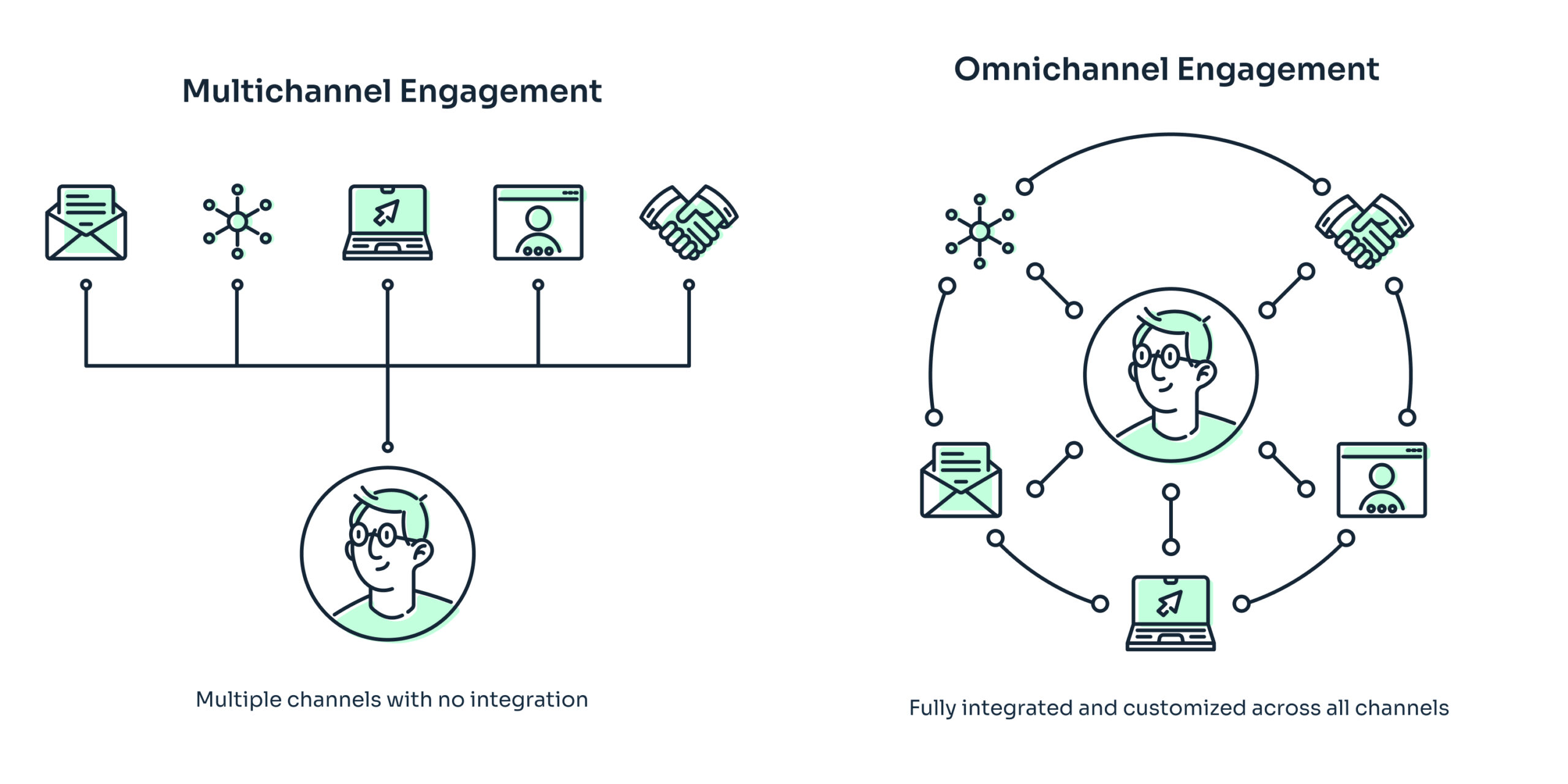
With the ability to offer a hyper-focused, omnichannel experience, individualized targeting is emerging as the preferred approach in healthcare marketing. 

Why Switch from Demographic Targeting to Individualized Targeting

By leveraging consumer data, technology, and analytics, healthcare marketers can craft unique messages and content for the specific types of patients most likely to convert. These personalized messages appeal to the exact needs of each individual, building trust and credibility from the start.

The use of technology, such as artificial intelligence (AI) and machine learning (ML), has enabled healthcare marketers to gather and analyze vast amounts of data, making individualized targeting a reality.

The Impact of AI and Machine Learning

AI and ML algorithms can analyze consumer behavior, preferences, and demographics to deliver the highly relevant messages and experiences needed for conversion.

For example, AI-powered chatbots on a provider’s website can offer patients instant access to personalized information and support, while ML algorithms can help healthcare marketers predict shifts in consumer behavior, making it possible to deliver the right messages at the right time.

Experience Personalization at Scale

One of the key benefits of AI and ML in healthcare marketing is the ability to personalize at scale. In the past, personalization was a time-consuming and manual process, but today, AI and ML algorithms can process vast amounts of data in a matter of seconds. 

However, privacy regulations, such as GDPR in Europe and HIPAA in the US, have added additional complexities to the equation. Healthcare marketers need to be mindful of privacy concerns while implementing personalization strategies.

Emerging Trends in Personalized Marketing

The healthcare industry is rapidly changing, and personalization is no exception. Conversational interfaces, such as the chatbots discussed above, are becoming more prevalent, allowing patients to get relevant information on their health and set appointments in a natural, conversation-like manner. 

Additionally, patient-generated data from wearables and health-tracking apps allows marketers to gather even more information about their target audience.

Conversational Interfaces

Chatbots can be programmed to provide personalized responses based on the user’s past interactions and other existing data. For example, if a user has previously asked a chatbot to find information about a specific condition, the chatbot can use AI and ML algorithms to provide more personalized results in future conversations with the same user. 

One of the key benefits of conversational interfaces is their 24/7 availability, which allows patients to access information and support whenever they need it. This not only enhances the overall patient experience but is critical for building trust and loyalty.

Patient-generated Data

The rise of wearables and health-tracking apps has made it possible for marketers to target audiences using data generated by those devices. Messaging can be tailored based on health metrics, lifestyle, behaviors, and more.

Additionally, patient-generated data can be used to identify potential patients who are most likely to benefit from a healthcare provider’s services. This can be especially useful for marketing campaigns that focus on condition or symptom-specific treatments.

Marketing Personalization for an HCP Audience

While account-based marketing is a great tool for B2C marketing (targeting patients), it is equally effective for B2B marketing, which targets healthcare provider (HCP) audiences. With the ability to target specific titles, departments, and affiliations, HCP personalization can help cut through the clutter and deliver the most relevant messages to the right people.

Personalize Your Healthcare Marketing Strategy with Levo Health

Levo Health is a full-service healthcare marketing agency with powerful targeting solutions. Our team can create personalized, highly targeted campaigns tailored to the needs of your audience. We offer advanced segmentation and targeting tools, as well as automated workflow technology, so you can deliver customized messages to enhance your healthcare marketing strategy. Contact us today to learn more.

The post The Future of Personalized Marketing in the Healthcare Industry appeared first on Levo Health.

]]>
What Role Does Healthcare SEO Play in a 2023 Marketing Strategy? https://staging.levohealth.com/what-role-does-healthcare-seo-play-in-a-2023-marketing-strategy/ https://staging.levohealth.com/what-role-does-healthcare-seo-play-in-a-2023-marketing-strategy/#respond Tue, 31 Jan 2023 15:58:22 +0000 https://staging.levohealth.com/?p=9369 As the healthcare industry continues to evolve, digital marketing strategies, such as search engine optimization (SEO), have become increasingly crucial for healthcare organizations. Search engine optimization sits at the heart of any successful healthcare marketing strategy. Therefore, it is essential to become familiar with the role SEO strategy plays in healthcare marketing and healthcare SEO best practices that should be employed in 2023 to create a successful digital marketing plan. What is Search Engine Optimization? SEO is the practice of optimizing a website to rank higher in search engine results for relevant keywords and phrases. This can include optimizing the website’s content, meta tags, and images for search engines. Additionally, adding high-quality backlinks to your website may help boost its ranking. When potential patients search for a healthcare provider or service in their area, they will likely rely on search engines like Google or Bing to find the information they need. Optimizing your website and online presence for search engines may make your practice more likely to appear at the top of search results. In turn, this may lead to more patients visiting your website and ultimately booking appointments at your practice. How Healthcare SEO Differs from Other Industries Not all SEO strategies are created equal. SEO best practices may differ based on the industry you are in. This is especially true for SEO in healthcare. Healthcare-related queries tend to be more specific and informational rather than transactional. For example, someone searching for a new pair of shoes might search […]

The post What Role Does Healthcare SEO Play in a 2023 Marketing Strategy? appeared first on Levo Health.

]]>
As the healthcare industry continues to evolve, digital marketing strategies, such as search engine optimization (SEO), have become increasingly crucial for healthcare organizations. Search engine optimization sits at the heart of any successful healthcare marketing strategy. Therefore, it is essential to become familiar with the role SEO strategy plays in healthcare marketing and healthcare SEO best practices that should be employed in 2023 to create a successful digital marketing plan.

What is Search Engine Optimization?

SEO is the practice of optimizing a website to rank higher in search engine results for relevant keywords and phrases. This can include optimizing the website’s content, meta tags, and images for search engines. Additionally, adding high-quality backlinks to your website may help boost its ranking.

When potential patients search for a healthcare provider or service in their area, they will likely rely on search engines like Google or Bing to find the information they need. Optimizing your website and online presence for search engines may make your practice more likely to appear at the top of search results. In turn, this may lead to more patients visiting your website and ultimately booking appointments at your practice.

How Healthcare SEO Differs from Other Industries

Not all SEO strategies are created equal. SEO best practices may differ based on the industry you are in. This is especially true for SEO in healthcare. Healthcare-related queries tend to be more specific and informational rather than transactional.

For example, someone searching for a new pair of shoes might search for “shoe stores near me,” while someone searching for a new doctor might search for “best cardiologist in Houston.” This means that healthcare SEO needs to be focused on providing users with the most accurate and up-to-date information, which can help establish credibility with search engines.

Moreover, healthcare websites must abide by industry-specific regulations to remain compliant with SEO standards. SEO best practices for healthcare may include:

Lastly, the healthcare industry is an ever-evolving field. New treatments, drugs, and technologies are constantly being developed. Therefore, SEO for this industry should be dynamic and constantly updated with new information.

SEO Key Aspects and Best Practices for 2023

With the increasing number of healthcare providers and practices, the competition to be found online is becoming fierce in 2023. A strong SEO strategy can set you apart from the competition and make it more likely that potential patients will choose your practice over others. In order to ensure a successful SEO strategy this year, there are a few key aspects and best practices that should be implemented.

Find Relevant Keywords and Phrases

When searching for keywords to use on a page, it is important to focus on terms that are relevant to your practice and have a good search volume. Keywords that are too general will lead to more competition and a less targeted audience. For instance, if you’re running a dental practice, it would be more appropriate to target “dental implants” instead of just “dentists,” which is more general and competitive.

Prioritize Link Building

Link building is one of the most crucial SEO practices for any industry. However, in healthcare SEO, link building is even more critical due to its focus on providing credible and accurate information. Search engines prioritize websites with links from other reputable sources, so it’s important to build high-quality links from sources such as medical journals, health organizations, and universities.

Utilize SEO Tools and Resources

Boosting your practice’s SEO efforts can be a complex and time-consuming task. Luckily, there are tools and resources available to assist in SEO efforts, such as reporting tools, keyword research tools, and SEO audit platforms. Leveraging these resources may help streamline your SEO strategy and ensure you’re up-to-date with the best practices in 2023.

Optimize Your Website’s User Experience

Getting a potential patient to click on your website is only half the battle. Once they land on your site, it’s important to make sure the user experience is optimized and your healthcare website is accessible. This means ensuring pages load quickly, have clear and easy-to-follow navigation, and utilize relevant keywords throughout the page.

High bounce rates are a red flag for search engines and may negatively impact SEO rankings, so it’s vital that your website is user-friendly and well-organized. In today’s world, most web users are accessing websites via mobile devices, so ensuring your website is optimized for mobile is paramount. 

Create Engaging and Accurate Content

In addition to optimizing user experience, content is also key to having a well-rounded SEO strategy. Having accurate and up-to-date information is crucial to gaining users’ trust within the healthcare industry. This means creating content that focuses on engaging and relevant medical topics that provide users with credible resources. The longer users stay on your page, the more SEO authority search engines will give your website.

Build a Google Business Profile

Having a presence on Google My Business can be incredibly beneficial for SEO visibility. Not only does it help increase your SEO rankings, but it also allows potential patients to easily find your practice’s contact information, reviews, business hours, and more all in one place.

This may help increase your organic traffic, which is a direct factor for SEO. Having accurate and up-to-date information on your Google business profile also helps establish trust and credibility with search engines and potential patients. Regularly updating information, responding to reviews, and adding pictures may boost your online presence and improve your SEO strategy.

Why SEO Matters Now and Into the Future

SEO will continue to be crucial for businesses in 2023 and into the future as more people rely on search engines to discover and research healthcare products and services. Having a solid SEO strategy for 2023 will help increase visibility, drive more traffic to your website and ultimately generate more revenue. As technology and search engines evolve, businesses must adapt their SEO strategies accordingly to stay competitive.

Amplify Your Healthcare SEO Strategy with Levo Health

Are you looking to amplify your practice’s SEO efforts in 2023? Consider leveraging the expertise of Levo Health’s SEO team to optimize your website, create engaging content, and boost organic traffic. With Levo Health, you’ll get a team of digital strategists who are focused on maximizing your SEO and giving you the best possible return on investment. Contact Levo Health and supercharge your SEO strategy for 2023 and beyond.

The post What Role Does Healthcare SEO Play in a 2023 Marketing Strategy? appeared first on Levo Health.

]]>
https://staging.levohealth.com/what-role-does-healthcare-seo-play-in-a-2023-marketing-strategy/feed/ 0
The Role of Patient Experience in Healthcare Loyalty https://staging.levohealth.com/the-role-of-patient-experience-in-healthcare-loyalty/ Wed, 18 Jan 2023 17:35:39 +0000 https://staging.levohealth.com/?p=9360 The post The Role of Patient Experience in Healthcare Loyalty appeared first on Levo Health.

]]>

The healthcare industry has long focused on the quality of medical treatment as the primary factor in patient satisfaction. However, a recent report released by Accenture found patient experience factors such as convenience, communication, and respect to be just as important to patients when choosing a healthcare provider.

Failure to meet patient experience expectations is a major contributing factor to why some patients are willing to switch providers.

A Shift in Health Experience Expectations

As the profound role of consumerism in healthcare increases, patients have more options than ever when it comes to finding a provider. With the rise of telemedicine and the increasing prevalence of retail clinics, patients can easily switch to a new provider if they are not satisfied with their current one.

Patients are Holding Providers Accountable

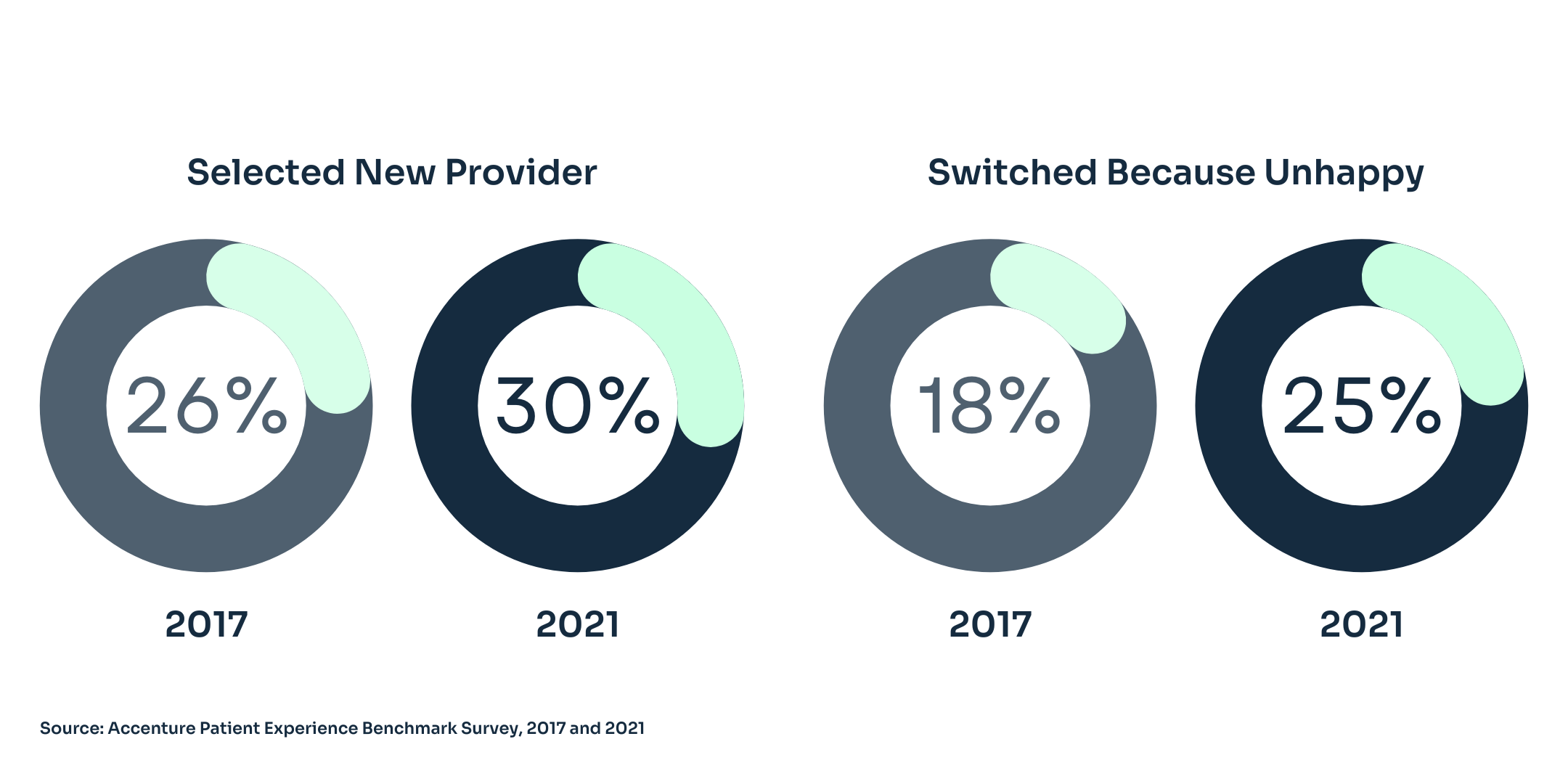
According to the Accenture report, 30% of people selected a new provider in 2021 (up from 26% in 2017), and 25% of those individuals switched providers because they were unhappy (up 18% from 2017).

Navigation factors, such as difficulties in doing business, poor experiences with administrative staff and inadequate digital solutions, are among the most commonly cited reasons patients have switched.

People Demand a Better Experience from Payers

The Accenture report also found 49% of people who left payers did so due to experience factors like:

  • Inaccurate or inconsistent information
  • Unanswered questions
  • Poor experiences using digital tools
  • Poor customer service
  • Discomfort with how payers used their personal data

Most patients expect more from their plan’s digital offerings, including easier ways to understand and choose coverage, view out-of-pocket costs, and manage claims processing. Similarly, customer service is an important dimension of a plan’s quality.

How to Deliver a Higher-quality Patient Experience

This trend toward prioritizing patient experience has implications for both payers and providers. Payers may need to consider the patient experience as a key factor in their network development and contracting strategies. Providers, on the other hand, must focus on delivering a high-quality patient experience in order to retain their patient base.

Prioritize Access and Convenience

Patients want the convenience of a seamless and effective experience. Providers should strive to provide easy access to care, such as through online appointment scheduling platforms or telehealth services.

Customer service and administrative staff should also be well-trained to provide timely and accurate information. Providers should have a system in place that allows patients to easily understand the cost of medical services, coverage options, and payment policies.

Make it Easy to Work with You

Providers should strive to make it easy for patients to access their medical records, submit questions and receive timely responses. They can use digital tools such as patient portals, apps and text messages to ensure that the patient experience is both personalized and efficient.

Whether taking in-office or virtual appointments, providers should take the time to listen and be respectful of patients’ needs. Taking these steps can help cultivate loyalty with existing patients while also attracting new ones.

Earn Patient Trust and Respect

In addition to providing convenience and access, providers must also strive to earn patient trust and respect. This can be done by emphasizing transparency in the care process through clear communication about diagnosis, treatment plans and expectations for outcomes.

Providers should also ensure their billing practices are transparent and consistent with industry standards.

Start Meeting New Patient Expectations

Improving the patient experience can be a complex task, as it involves addressing a wide range of factors such as wait times, communication, and the physical environment of the healthcare facility. However, the effort is worth it, as a positive patient experience can lead to increased loyalty, higher patient satisfaction scores, and better health outcomes.

Levo Health is a full-service marketing and consultancy firm that helps healthcare organizations build relationships with patients and stakeholders. We specialize in developing bespoke patient experience strategies that drive loyalty, engagement, and revenue for our clients – even with reduced marketing budgets

Contact us today for more information about how we can help you meet the growing needs of your patient audience.

The post The Role of Patient Experience in Healthcare Loyalty appeared first on Levo Health.

]]>
Healthcare Marketing Strategies to Adopt During a Recession https://staging.levohealth.com/healthcare-marketing-strategies-to-adopt-during-a-recession/ https://staging.levohealth.com/healthcare-marketing-strategies-to-adopt-during-a-recession/#respond Mon, 16 Jan 2023 20:57:51 +0000 https://staging.levohealth.com/?p=9355 If you work in the healthcare industry, it’s essential to remain prepared for potential challenges that may arise, including economic recessions. While no one can predict the future with certainty, having a solid healthcare marketing strategy in place can help your practice weather any storms that may come your way. With inflation and supply chain disruptions impacting the economy, a recession may be looming in the future. A solid healthcare marketing strategy can help you stay ahead of the curve and mitigate the adverse effects a recession can have on your practice. 6 Healthcare Marketing Strategies to Consider When Preparing for a Recession Unfortunately, if a recession does impact the economy, it won’t be as easy as simply riding it out. You must be proactive in your preparations and adopt specific healthcare marketing strategies now to help your practice stay afloat. Healthcare practices and medical device companies that are lackadaisical in their recession preparations may find themselves in a vulnerable spot if a recession hits. Therefore, incorporating the following strategies into your marketing plan now will give you a better chance of success. 1. Keep Business Priorities and Goals in Alignment During a recession, it’s important to keep your business priorities and goals aligned to ensure you make the most of your marketing efforts. This may involve reassessing your target audience, identifying new growth opportunities, or revising your marketing budget to allocate resources more effectively. To keep your business priorities and goals in alignment, consider conducting a thorough review of […]

The post Healthcare Marketing Strategies to Adopt During a Recession appeared first on Levo Health.

]]>
If you work in the healthcare industry, it’s essential to remain prepared for potential challenges that may arise, including economic recessions. While no one can predict the future with certainty, having a solid healthcare marketing strategy in place can help your practice weather any storms that may come your way.

With inflation and supply chain disruptions impacting the economy, a recession may be looming in the future. A solid healthcare marketing strategy can help you stay ahead of the curve and mitigate the adverse effects a recession can have on your practice.

6 Healthcare Marketing Strategies to Consider When Preparing for a Recession

Unfortunately, if a recession does impact the economy, it won’t be as easy as simply riding it out. You must be proactive in your preparations and adopt specific healthcare marketing strategies now to help your practice stay afloat.

Healthcare practices and medical device companies that are lackadaisical in their recession preparations may find themselves in a vulnerable spot if a recession hits. Therefore, incorporating the following strategies into your marketing plan now will give you a better chance of success.

1. Keep Business Priorities and Goals in Alignment

During a recession, it’s important to keep your business priorities and goals aligned to ensure you make the most of your marketing efforts. This may involve reassessing your target audience, identifying new growth opportunities, or revising your marketing budget to allocate resources more effectively.

To keep your business priorities and goals in alignment, consider conducting a thorough review of your current healthcare marketing strategy and identifying areas that may need to be adjusted to better suit your current needs. This may involve focusing more on digital marketing channels, such as social media or email marketing, to reach a wider audience at a lower cost.

2. Prioritize Bottom of the Funnel Marketing Campaigns

Focusing on marketing campaigns that are more likely to produce tangible results is critical in a recession. This means focusing your efforts on bottom-of-the-funnel (BOF) campaigns, such as retargeting and email marketing. These campaigns typically have a higher ROI than top-of-the-funnel (TOF) campaigns and are more likely to generate leads that can be converted into paying customers.

By prioritizing BOF campaigns, you can ensure that the resources you are spending on marketing are being used in a way that is most likely to result in actual sales. BOF conversion-based PPC campaigns, for example, can be an effective way to target customers who are close to making a purchase decision and drive them toward your practice. This is because when potential patients are ready to book an appointment or service, they will likely utilize a search engine to search for healthcare providers in their area.

3. Focus On Driving Demand and Building Your Brand

When the economy is in a recession, it’s crucial to focus on driving demand for your products or services and building your brand to emerge stronger on the other side. To drive demand, consider implementing targeted marketing campaigns that showcase the value of your products or services and highlight how they can solve your customers’ problems or meet their needs. This may involve investing in content marketing to establish your practice as a leader in your industry or utilizing search engine optimization (SEO) to improve your online visibility.

Building your brand can also help you stand out in a crowded market and establish trust with potential customers. This may involve developing a strong brand identity and messaging, as well as consistently delivering high-quality products or services that exceed customer expectations.

4. Hone in on Organic Growth

While in a recession, many paid media channels may become too expensive to use effectively, so it’s important to focus on organic growth strategies. Organic growth involves optimizing your website and utilizing content marketing techniques such as blogging and social media to reach new customers without spending much money.

If you aren’t already, it is vital to start prioritizing your website and SEO. This could include optimizing your website for speed and accessibility or focusing on keyword research to identify topics that are likely to appeal to your target audience. By focusing on organic growth early, you can continue driving traffic and gaining qualified leads even if you have to cut your paid media budget in the future.

5. Strategically Promote Healthcare Services

As potential consumers deal with financial strain, they may be more likely to seek affordable healthcare services. Strategically promoting healthcare services that are lower in cost can help you draw in new customers or retain existing ones during a recession. This may include:

  • Offering discounts on certain services
  • Launching promotions to showcase the value of your practice’s offerings
  • Focusing on preventative care to help patients avoid more expensive treatments
  • Prioritizing mental health services to help people cope with recession-related stress
  • Promoting telehealth services that reduce healthcare costs

6. Leverage Electronic Health Records to Drive Demand

As you fight recession-related budget constraints, it’s essential to leverage your practice’s electronic health records (EHRs). Targeting potential patients through your EHR and curating marketing campaigns to nurture and convert them may help you drive demand for specific procedures or services.

To implement this strategy, you can begin by combing through your EHR to identify potential patients who may be a good fit for a particular procedure or service based on their health data. You can then work with your medical staff to review these potential candidates and select the best ones to target. Once you have a list of potential patients, you may create focused healthcare marketing campaigns to drive demand without going over budget.

This may involve creating targeted emails or social media campaigns that provide valuable information about the procedure’s benefits and how it may help patients improve their health. You may also consider offering free consultations or information sessions to further educate potential patients and help convert them into paying clients.

Get Ahead of Your Healthcare Marketing Efforts with Levo Health

If you’re looking for support in preparing your healthcare marketing strategy for the future, Levo Health can help. As a full-service healthcare marketing agency, we have the expertise and resources to help your practice navigate these challenging times and come out on top. Contact us today to learn more about how we can support your marketing efforts and drive business growth.

The post Healthcare Marketing Strategies to Adopt During a Recession appeared first on Levo Health.

]]>
https://staging.levohealth.com/healthcare-marketing-strategies-to-adopt-during-a-recession/feed/ 0
6 Healthcare Marketing Strategies to Skyrocket Your Growth in 2023 https://staging.levohealth.com/6-healthcare-marketing-strategies-to-skyrocket-your-growth-in-2023/ Tue, 20 Dec 2022 21:09:34 +0000 https://staging.levohealth.com/?p=9345 Healthcare is a rapidly changing industry, and if you want to stay ahead of the curve, you’ll need to adopt some cutting-edge marketing strategies. As we enter 2023, there are several strategies you can adopt to improve your healthcare marketing efforts and grow your practice. Adopting the following six marketing strategies may help you stay competitive, bring in new patients, and grow your practice substantially. 6 Medical Marketing Strategies to Adopt in 2023 Your healthcare marketing strategy can make or break your practice. With a well-thought-out and executed plan, you can be in a better position to outperform your competition. If you want your medical marketing strategy to be successful in 2023, here are six key strategies you should consider incorporating. 1. Leverage Video Marketing With people spending an average of 19 hours a week watching videos online, video content is one of the most powerful ways to engage with patients in the healthcare industry. You can use videos to inform, educate, and promote your medical practice. This marketing strategy allows you to effectively communicate with patients, explain treatments or products, showcase staff members & facilities, and much more. Videos are also excellent for boosting SEO efforts by increasing website traffic. Potential patients are more likely to watch a short and engaging video than read a long-form article. Videos that are less than one minute long are more likely to be watched all the way through, so make sure to keep videos concise and to the point. Furthermore, investing in […]

The post 6 Healthcare Marketing Strategies to Skyrocket Your Growth in 2023 appeared first on Levo Health.

]]>
Healthcare is a rapidly changing industry, and if you want to stay ahead of the curve, you’ll need to adopt some cutting-edge marketing strategies. As we enter 2023, there are several strategies you can adopt to improve your healthcare marketing efforts and grow your practice. Adopting the following six marketing strategies may help you stay competitive, bring in new patients, and grow your practice substantially.

6 Medical Marketing Strategies to Adopt in 2023

Your healthcare marketing strategy can make or break your practice. With a well-thought-out and executed plan, you can be in a better position to outperform your competition. If you want your medical marketing strategy to be successful in 2023, here are six key strategies you should consider incorporating.

1. Leverage Video Marketing

With people spending an average of 19 hours a week watching videos online, video content is one of the most powerful ways to engage with patients in the healthcare industry. You can use videos to inform, educate, and promote your medical practice. This marketing strategy allows you to effectively communicate with patients, explain treatments or products, showcase staff members & facilities, and much more. Videos are also excellent for boosting SEO efforts by increasing website traffic.

Potential patients are more likely to watch a short and engaging video than read a long-form article. Videos that are less than one minute long are more likely to be watched all the way through, so make sure to keep videos concise and to the point.

Furthermore, investing in video content may significantly improve your ROI and help you build trust with potential patients. In fact, 68% of marketers say content that showcases their products and services, like videos, generates the biggest ROI.

2. Create a Strong Social Media Presence

According to 2021 data, roughly 70% of Americans use social media to connect with others, share information, and entertain themselves. As social media becomes more integral to how we communicate and consume information, it’s crucial to have a strong social media presence. From educational videos to webinars, you can share all kinds of content to inform and engage with potential patients.

Additionally, keep in mind that this marketing strategy is about more than just posting content — it’s about engaging with patients. So, make sure to respond to comments, answer questions, and interact with your followers regularly to build relationships and trust. If you haven’t already, now is the time to become familiar with social media platforms such as Twitter, Facebook, Linkedin, and Instagram.

3. Optimize Your Website UX

The user experience of your website should be a top priority for your healthcare marketing strategy in 2023. A well-designed UX not only helps lower bounce rates but also helps you rank higher on search engine results pages, resulting in more organic traffic and leads. Make sure your website is easy to navigate, and all necessary information can be found quickly and easily. In addition, the load time of your website should be minimal, as people are less likely to wait for a slow-loading page.

Moreover, be sure to keep your site linkable and shareable. Include social sharing buttons on each page so visitors can easily share your content with their peers. Additionally, optimize your website for mobile devices by ensuring it’s responsive and works well on all screens. The homepage of your website should give visitors a great impression of your practice and convey what you do. Whenever you make changes to your website, make them with the user experience in mind.

4. Use a Combination of Organic and Paid Advertising

The key to a successful marketing strategy is to have a mix of organic and paid advertising, as this helps increase visibility and engagement with potential patients. Organic marketing strategies such as social media, blogging, SEO, word-of-mouth, etc., are cost-effective ways to promote your practice and reach new audiences. SEO should be the main focus of your organic efforts, as it drives over 1000% more traffic than organic social media.

In addition, paid advertising can be a great way to reach more targeted audiences and get your content in front of the right people. Paid social media, for example, can be used to effectively target specific age groups, genders, and even locations. Furthermore, PPC (pay-per-click) is a great way to get instant traffic to your website that’s likely to convert. 

5. Generate Patient Centric Content

Content should be written in a language that resonates with your target audience, as this helps build trust among potential patients. Make sure to build relationships by connecting and engaging with people online through comments, likes, and shares. This will help you create a community of followers that can be leveraged for future campaigns.

Avoid spammy content and focus on providing value to your audience. Even one spammy post can harm your reputation and discourage potential patients from engaging with your practice. Content should be educational, informative, entertaining, and engaging. Also, use keywords and phrases related to your practice, as this will help with SEO efforts and ensure you show up for relevant searches.

6. Automate Your Marketing Efforts with AI

Artificial intelligence (AI) is changing the marketing landscape, and healthcare practices should take advantage of all it offers. For example, AI can be used to automate routine tasks such as email campaigns, scheduling appointments, or gathering patient feedback. This helps save time and money while also ensuring accuracy. Taking advantage of AI also enables you to get more from your data while giving you more time to focus on generating content that resonates with your target audience.

Propel Your Marketing Efforts with Levo Health

As you can see, there are a variety of strategies that healthcare practices can use to create successful marketing campaigns in 2023. However, staying on top of the ever-changing digital landscape can be challenging. That’s where Levo Health comes in. With our full-service healthcare marketing solutions, we can help your practice exceed its goals.

From SEO and content marketing to social media management and everything in between, we have the tools and expertise to propel your practice’s marketing efforts to the next level. Contact us today to learn more about our services and how Levo Health can help you build an effective healthcare marketing strategy.

The post 6 Healthcare Marketing Strategies to Skyrocket Your Growth in 2023 appeared first on Levo Health.

]]>
Multichannel Versus Omnichannel Healthcare Marketing Strategies https://staging.levohealth.com/multichannel-versus-omnichannel-healthcare-marketing-strategies/ https://staging.levohealth.com/multichannel-versus-omnichannel-healthcare-marketing-strategies/#respond Tue, 06 Dec 2022 20:36:56 +0000 https://staging.levohealth.com/?p=9336 The post Multichannel Versus Omnichannel Healthcare Marketing Strategies appeared first on Levo Health.

]]>

At a glance, multichannel and omnichannel appear to have similar meanings. However, this couldn’t be further from the truth. While multichannel is the most common healthcare marketing strategy, an omnichannel approach is considered the gold standard. This is because Omnichannel enables marketers to reach potential customers through the right channels at the right time to achieve maximum return on investment (ROI).

Multichannel Engagement Explained

Multichannel healthcare marketing uses multiple channels to reach a target audience. This could include email, phone calls, direct mail, radio and television ads, social media campaigns, print materials, etc.

While multichannel engagement can be effective in reaching a large audience quickly and cheaply, it comes with some drawbacks:

There is No Integration

Sure, you can use multiple channels to get your message out, but without integration, you can’t be sure your audience is seeing consistent messaging across them. That means they could end up with a disjointed or even contradictory experience, hindering your marketing efforts.

Lack of Personalization

To reach the right people at the right time, you need to be able to tailor and customize your message, creating a natural, conversation-like experience. Without personalization, your target audience could get messages that don’t align with where they are in the buyer’s journey, ultimately leading to a low conversion rate.

Omnichannel Engagement Explained

Omnichannel engagement takes the multichannel approach to the next level. It also allows for more personalization and customization than multichannel engagement – enabling marketers to craft unique messages tailored specifically for each of their target audiences based on where they are in the buyer’s journey. Omnichannel marketing flows from one channel to the next, with each interaction seamlessly integrated across channels.

Some of the benefits of an omnichannel approach include:

Hyper-personalization

Omnichannel strategies utilize consumer data to thoroughly understand each target audience, their pain points and their desires. This allows for a hyper-personalized experience that is more likely to benefit the bottom line.

Unified Messaging

Omnichannel marketing connects touchpoints to create consistent and unified messaging across channels, taking the audience on a smooth and conversation-like journey to the end goal.

An Omnichannel Approach to Healthcare Marketing

Healthcare marketing teams implementing an omnichannel approach are more likely to realize higher ROI, as they can tailor messages and create relevant interactions with their target audience.

The key is using data to understand where your audience is in the buyer’s journey, so you can deliver the right content at the right time to spark the best decisions for your business.

Ultimately, an omnichannel approach:

Requires Fewer Touchpoints

As a strategy that enables marketers to understand the needs of their target audience faster, omnichannel marketing requires fewer touchpoints to reach the desired outcome.

Provides a Better User Experience

Engaging with potential customers through an omnichannel approach allows healthcare marketing teams to provide a better user experience. It creates an effortless flow of information and interaction between channels that is more likely to result in conversions.

Switching from Multichannel to Omnichannel

The switch from multichannel to omnichannel healthcare marketing is a process – but you don’t have to do it alone. Levo Health provides our clients with true omnichannel reach to their consumers. Real-world touchpoints comprise offline data and are deterministically linked with addressable online identifiers to provide a people-based, omnichannel marketing approach.

We have years of experience crafting dynamic omnichannel content for both direct-to-patient and direct-to-healthcare provider marketing strategies. By taking a data-driven approach, our experienced team of healthcare marketing professionals helps ensure you get the most out of every interaction with your target audience.

To learn more about switching from multichannel to omnichannel healthcare marketing, contact Levo Health today – and start engaging effectively with your customers across all channels.

Contact us today or call (813) 235-0830 to learn more about how an omnichannel approach can benefit your healthcare marketing efforts.

Resources:

https://www.veeva.com/resources/agency-tips-for-omnichannel-content-success/

The post Multichannel Versus Omnichannel Healthcare Marketing Strategies appeared first on Levo Health.

]]>
https://staging.levohealth.com/multichannel-versus-omnichannel-healthcare-marketing-strategies/feed/ 0